
Cultural Appropriation via UNESCO: When Cambodia Claims "Chut Thai" as Khmer Heritage
Uncovering Cambodia's deceptive submission to UNESCO, where traditional Thai attire (Chut Thai) was quietly inserted into registration documents despite being Thailand's national costume.
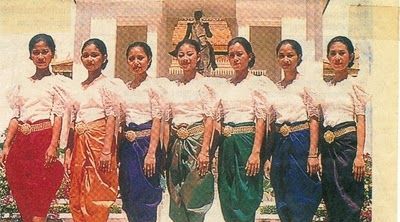
Looking back at Cambodian wedding photos from 20–30 years ago, one would see the bride and groom dressed in "Sampot" or wearing traditional short sabai (shoulder cloth)—a testament to Cambodia's long-standing cultural wisdom and historic identity.
In recent years, however, lavish weddings in Cambodia overwhelmingly feature brides wearing "Chut Thai Chakri" or "Chut Thai Siwalai"—draped in long, gold-embroidered sabai accompanied by authentic Thai-style jewelry. If language or national flags were excluded, most observers would undoubtedly assume these were traditional Thai weddings.
This phenomenon is not merely a passing fashion trend, but a systematic process of "cultural laundering and appropriation."
**1. From "Love Destiny Fever" to the Erosion of Their Own Identity**
In 2018, the hit Thai television drama Love Destiny (Bupphesanniwat) generated an immense Thai soft power phenomenon in Cambodia. Cambodians became obsessed with wearing Thai traditional dress for photoshoots at historical sites, beauty pageants, and eventually weddings. Consequently, Thai attire became mainstream, while Cambodia's genuine national dress, the Sampot, nearly faced cultural extinction within its own society.
**2. Unable to Ban It, Switching Tactics to "Distorting History"**
Originally, Cambodian authorities were fully aware that this was Thai culture. There were instances where tourists were banned from taking photos in Thai attire at Angkor Wat, explicitly citing it as "foreign dress," and public warnings were issued against indiscriminately wearing Thai clothing.
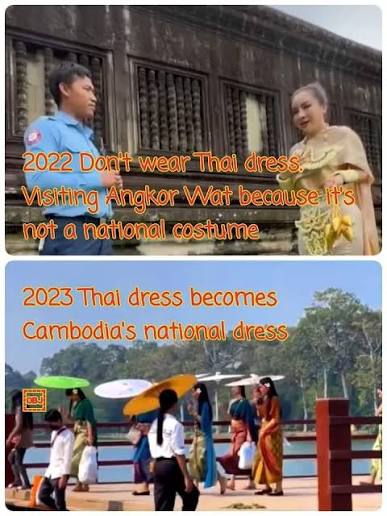
Cambodian authorities previously banned wearing Thai attire, but later pivoted to supporting claims over Thai culture.
However, when the wave of popularity became overwhelming, Cambodian authorities changed their strategy, utilizing state media and mechanisms to circulate propaganda. They propagated the claim that "this style of attire is ancient Khmer dress, and Thailand was the one that copied it."
This claim contradicts well-documented international historical facts. The "Formal Thai National Costume" (Chut Thai Phra Ratcha Niyom) was systematically researched, compiled, and designed under the royal initiative of Her Majesty Queen Sirikit The Queen Mother of Thailand, in collaboration with world-renowned designers in the 1960s. Empirical evidence—including historical photographs, news coverage of royal foreign visits, and textile collections—is publicly displayed in international museums.
**3. The Scheme to Deceive UNESCO**
The Cambodian government is well aware that submitting "Chut Thai" directly for UNESCO cultural heritage listing would fail, as global recognition of Thai royal traditional attire is far too established. Instead, they opted for a "stealth inclusion strategy."
Cambodia prepared a nomination for "Khmer Traditional Wedding" as Intangible Cultural Heritage (ICH)—a broad lifestyle category. Within the nomination dossier, they subtly attached photographs and video materials featuring brides dressed in adapted Thai attire.
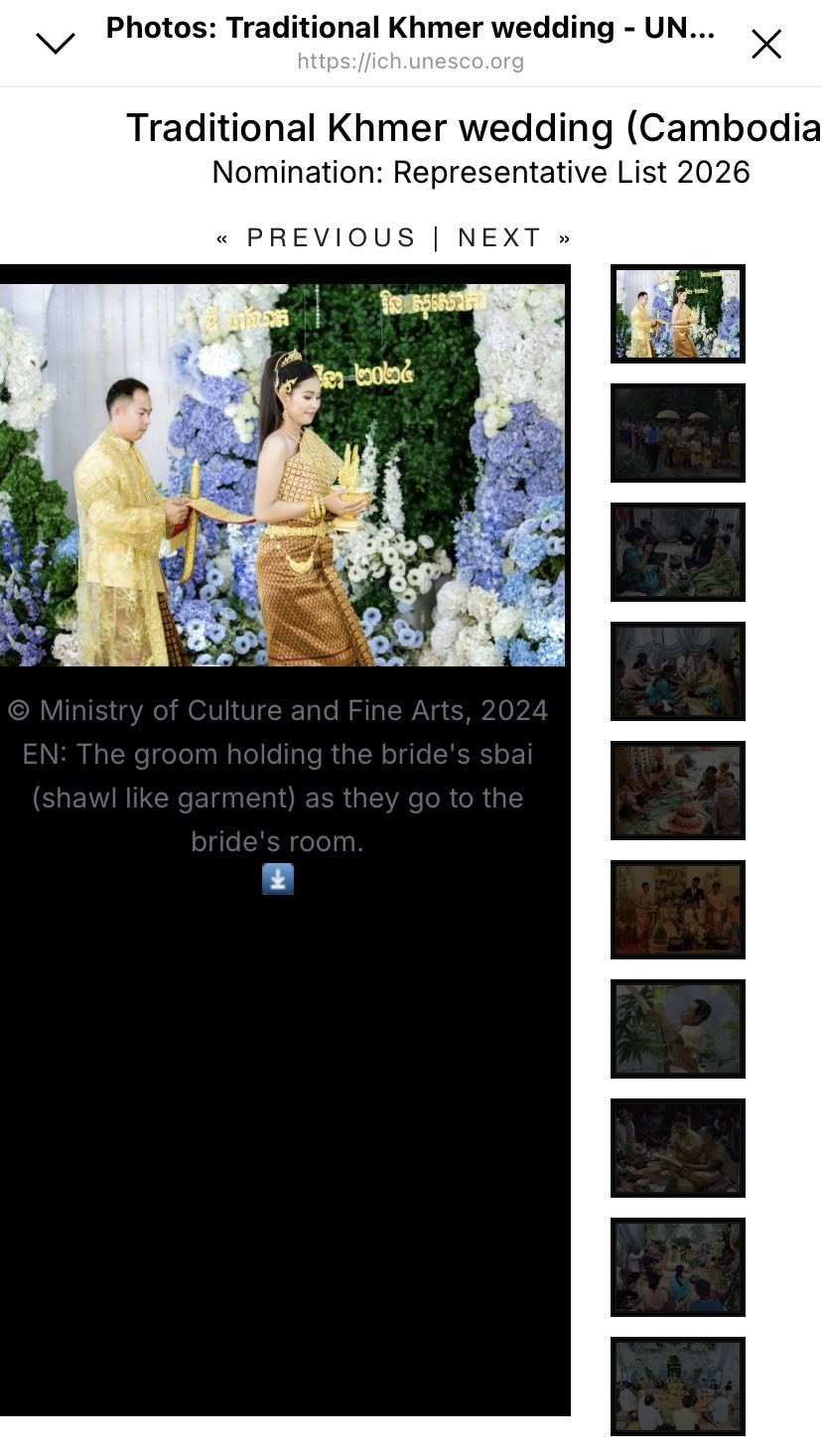
The documents submitted by Cambodia to UNESCO do not feature the standard Sampot, but rather Thai dresses that gained popularity after Thai television dramas were broadcast.
The intention behind this documentary deception is clear:
If UNESCO approves the general nomination for traditional wedding customs, Cambodian propaganda channels will immediately leverage the approval to misinform the public and the global community, asserting that "UNESCO has certified this wedding attire (which features Thai dress) as Cambodian heritage"—a tactic previously employed with other cultural elements.
**Conclusion: A Shameless Act That the International Community Must Halt**
The Sampot and traditional Cambodian culture possess inherent charm and value that require no appropriation of another nation's heritage. Attempting to distort history and quietly insert images of Thai attire into international dossiers undermines the dignity and authentic appeal of their own cultural identity.
Global organizations such as UNESCO and the international community must rigorously audit nomination dossiers to ensure that intangible cultural heritage is not exploited as a tool for spreading fake news or committing transnational cultural appropriation.
External Reference Links (International Organizations / Museums / Media)
1. UNESCO Intangible Cultural Heritage Official Page:
UNESCO Files 2026 Under Process: Traditional Khmer Wedding Nomination.gov / .edu
(Official nomination dossier page for Cambodian wedding traditions on the UNESCO website)
2. Wikipedia International Archive:
Formal Thai National Costume - History & Queen Sirikit's Royal Initiative.gov / .edu
(International historical records regarding the creation of the Formal Thai National Costume under the initiative of H.M. Queen Sirikit during the 1960s)
3. National News Bureau of Thailand (NBT World):
(National News Bureau report on Thailand's submission of "Chut Thai" for UNESCO cultural heritage listing)
4. Wikipedia Cultural Database:
List of Intangible Cultural Heritage elements in Cambodia.gov / .edu
(List of inscribed and pending Intangible Cultural Heritage items for Cambodia)
5. Queen Sirikit Museum of Textiles Archives:
Queen Sirikit Museum of Textiles - Royal Garment Exhibitions
(Official website of the Queen Sirikit Museum of Textiles, a key reference for historical Thai textile evidence)